Mini Split Installation in Mehlville, MO
Professional mini split installation in Mehlville, MO by Sheet Metal Contractors, Inc. Enjoy efficient comfort year-round. Schedule ductless install today!

Installing a mini split in Mehlville, MO gives homes efficient, targeted heating and cooling without invasive ductwork. With hot, humid summers and cold winters common to the St. Louis area, a properly designed mini split can balance comfort and utility savings for single rooms, additions, finished basements, or whole-house multi-zone systems. This page explains the mini split installation process from site assessment through commissioning and user guidance so you know exactly what to expect when choosing mini split installation in Mehlville, MO.
Why Mehlville homes benefit from mini split installation
- Older or brick homes in south St. Louis County often have limited or inefficient ductwork, making ductless solutions highly practical.
- High summer humidity and peak cooling loads make efficient zoning a cost-effective alternative to oversizing central HVAC.
- Tight retrofit spaces, second floors, basements, and sunrooms commonly need localized capacity without major construction.
Common mini split installation types and issues in Mehlville
- Single-zone wall-mounted units for a finished basement, bedroom, or addition.
- Multi-zone systems (1 outdoor to multiple indoor heads) for whole-home zoning without new ducts.
- Ceiling cassette or floor-mounted units where wall space is limited.
Common problems that lead homeowners to choose a mini split include uneven temperatures, high electric cooling bills, uncomfortable rooms with no duct access, and noisy window units or window AC inefficiencies.
Mini split installation process — what to expect
A professional mini split installation follows a structured sequence to ensure performance, longevity, and code compliance.
- Site assessment and load analysis
- A technician performs a room-by-room evaluation and does a heating and cooling load calculation (similar to Manual J) to determine correct capacity and zone layout.
- The assessment considers Mehlville-specific factors: southern sun exposure, attic insulation, basement dampness, and the home’s envelope condition.
- System sizing and layout
- Proper sizing avoids short cycling and humidity issues. Installers select single-zone or multi-zone systems and determine indoor head types and outdoor unit capacity.
- Layout planning identifies indoor head locations, refrigerant line routing paths, condensate drain routing, and the outdoor unit placement for service access and proper airflow.
- Placement of indoor and outdoor units
- Indoor heads: wall units are typically installed 6 to 8 feet above the floor for optimal air distribution. Ceiling cassettes or floor models are chosen where wall placement isn’t practical.
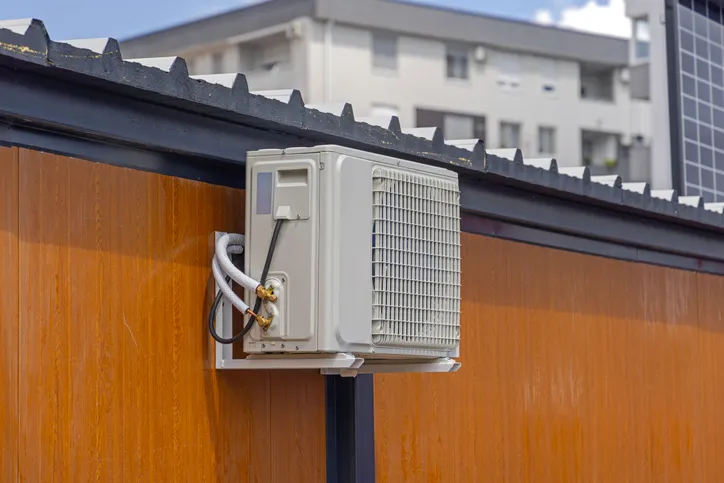
- Outdoor unit: mounted on a concrete pad, hurricane clips, or wall brackets, with 12 to 24 inches of clearance for airflow and maintenance. In Mehlville’s winter weather, elevation above the typical snow line and protection from road salt are considered.
- Refrigerant line, condensate, and wiring routing
- Refrigerant lines and condensate drains are routed through small holes in exterior walls or via closets, with proper insulation and a protective sleeve.
- Line set length limitations are observed to maintain performance. Long runs require careful planning and may affect refrigerant charge and system selection.
- Condensate drains are routed to a safe disposal point; where gravity drainage isn’t possible, a condensate pump is used.
- Electrical requirements and permits
- Mini splits generally require a dedicated circuit and a disconnect switch near the outdoor unit. Voltage requirements vary by model (120V or 208/240V).
- Installations follow local Mehlville and St. Louis County electrical and building codes. A licensed, union-trained electrician typically pulls permits and completes required inspections.
- Commissioning and testing
- The system is evacuated to remove moisture, leak-tested, and charged with the correct refrigerant per manufacturer specifications.
- Technicians test each indoor head for airflow, temperature split, control response, and communication with the outdoor unit.
- Performance is verified under both heating and cooling modes; any noise, vibration, or airflow issues are corrected before completion.
Common installation pitfalls and how they are prevented
- Oversizing or undersizing: avoided through detailed load calculations.
- Excessively long line sets: planned during design or addressed by selecting compatible equipment and adjusting refrigerant charge.
- Poor condensate routing: prevented by using proper slope, materials, and pumps when needed.
- Inadequate electrical provisions: addressed by coordinating with electricians and following code.
- Restricted outdoor airflow or vibration transfer: avoided using proper mounts, bases, and clearance.
Post-installation user guidance
- Controls: Installers set up remote controls and, when available, Wi-Fi thermostats. Users are shown how to program schedules, switches between modes, and use fan settings to maximize comfort.
- Filter care: Most indoor heads use washable or replaceable filters. Cleaning every 1 to 3 months is recommended in the St. Louis area to maintain efficiency, especially during pollen season.
- Seasonal checks: Annual maintenance before summer and winter peak seasons ensures reliability. Tasks include checking refrigerant levels, electrical connections, condensate drains, and fan motors.
- Warranty and documentation: Homeowners receive operating manuals, warranty registration details, and a record of system configuration and refrigerant charge.
Benefits you’ll see after a correct installation
- Zoned comfort: precise control for individual rooms or zones, eliminating hot and cold spots.
- Energy savings: modern inverter-driven compressors reduce cycling losses and maintain efficient operation through St. Louis seasonal extremes.
- Minimal disruption: small wall penetrations and no ductwork means faster installs and less interior construction.
- Improved indoor air quality: sealed mini split systems reduce duct-related dust and allergen pathways common in older homes.
Quality, compliance, and experience matters
As a family-owned, union-based St. Louis contractor with design-build capabilities and sheet metal expertise, installations are engineered to meet local climate challenges and code requirements. Proper planning, licensed electrical work, and experienced commissioning reduce callbacks, extend equipment life, and ensure the mini split performs efficiently through Mehlville’s humid summers and cold winters.
For homeowners considering mini split installation in Mehlville, MO, a thorough site assessment, correct sizing, permitted electrical work, careful line set routing, and professional commissioning are the elements that separate a reliable, efficient system from one that underperforms. Proper maintenance and seasonal checks complete the lifecycle, preserving comfort and energy savings for years.
Experience Lasting Comfort with Professional Mini Split Installation
When it comes to creating a home that’s efficient, reliable, and comfortable year-round, expert installation makes all the difference. Sheet Metal Contractors, Inc. combines union-trained craftsmanship with decades of HVAC experience to deliver systems that perform flawlessly in Mehlville’s unique climate. Don’t settle for less than precision and peace of mind—schedule your consultation today through our contact page and take the first step toward dependable comfort for your home.
our service
areas