AC Installation in Murphy, MO
Get expert AC installation in Murphy, MO with Sheet Metal Contractors, Inc. Reliable systems for long-term comfort. Book your air conditioner installation!

Installing a new air conditioning system is one of the most important investments you can make for comfort, indoor air quality, and long-term energy savings in Murphy, MO homes. With hot, humid Missouri summers and occasional severe storms, the right AC installation prevents short-cycling, reduces humidity problems that cause mold and discomfort, and lowers monthly cooling costs. This page explains the full AC installation process: from load calculations and unit sizing to site preparation, professional installation steps, testing and commissioning, warranty and financing considerations, and what homeowners should expect after installation.
Why proper AC installation matters in Murphy, MO
- Missouri’s humid summers increase latent cooling needs; undersized or poorly installed systems can cool air temperature but leave excess moisture.
- Properly sized and commissioned equipment lasts longer, performs more efficiently, and maintains consistent comfort across the home.
- Correct installation protects manufacturer warranties and avoids repeated callbacks for performance issues common after rushed installs.
Common AC installation types and options for Murphy homes
- Replacement split systems (air handler inside + condensing unit outside): common for existing ducted homes.
- High-efficiency heat pumps: effective for milder winters and energy savings when paired with proper backup heating.
- Ductless mini-splits: ideal for add-ons, garages, or homes lacking ductwork.
- Geothermal or VRV/VRF systems: higher-efficiency alternatives for new construction or major retrofits.
- Two-stage and variable-speed systems: improve dehumidification and comfort compared to single-stage units.
Diagnostic step: load calculations and unit sizing
Proper unit sizing begins with a room-by-room load calculation, not just a rule-of-thumb based on square footage. Typical steps include:
- Performing a Manual J load calculation that factors in orientation, insulation, window size and type, attic conditions, number of occupants, and local climate data for Murphy, MO.
- Checking ductwork with a Manual D analysis when duct modifications or replacements are needed.
- Balancing calculated sensible and latent loads to ensure the chosen system meets both temperature and humidity control needs.
Oversizing leads to short-cycling and poor dehumidification; undersizing leads to continuous running and premature wear. The objective is a right-sized system that matches the real home conditions.
Energy-efficient model selection
Energy-efficient models reduce operating costs and improve comfort:
- Look at SEER and EER ratings; higher SEER delivers better seasonal efficiency for Missouri summers.
- Variable-speed compressors and two-stage units adjust output to match load, improving humidity control and lowering run-time.
- ENERGY STAR qualified equipment can offer improved efficiency and may qualify for incentives.
- Consider matched systems (indoor coil and outdoor unit designed to work together) to ensure optimal performance.
- Alternatives like geothermal or VRV systems provide high efficiency, especially for larger homes or where long-term energy savings and sustainability are priorities.
Site preparation and pre-installation checklist
- Verify proper pad location and level for the outdoor condenser, with space for airflow and local code clearances.
- Confirm electrical service and breaker capacity for the new unit; upgrades may be required for high-efficiency equipment.
- Evaluate ductwork condition; leaking or undersized ducts should be repaired or replaced before installing the new unit.
- Plan refrigerant line routing, condensate drainage, and thermostat location for best performance and service access.
- Clear vegetation and provide adequate clearance for the outdoor unit to ensure airflow and easy maintenance.
Professional installation steps
A professional, code-compliant installation typically follows this sequence:
- Remove existing equipment and safely disconnect power, refrigerant, and condensate lines.
- Repair or modify ductwork as specified after Manual D and load findings.
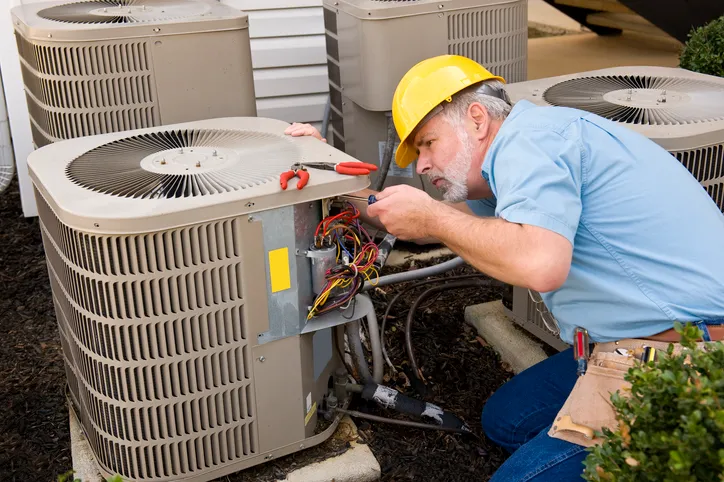
- Set level concrete or composite pad and mount outdoor unit; install indoor coil/air handler on suitable platform or in plenum.
- Run refrigerant lines, condensate piping, and required electrical wiring; ensure proper wire sizing and breaker protection.
- Evacuate the refrigerant lines with vacuum to remove moisture and non-condensables.
- Charge the system with the correct refrigerant quantity if required, using superheat/subcooling methods rather than fixed pounds where applicable.
- Install and configure thermostats (including programmable or Wi-Fi models) and zoning components if used.
Testing and commissioning
Thorough testing ensures the system performs to specification:
- Measure airflow and static pressure to confirm proper distribution.
- Verify refrigerant charge using superheat or subcooling numbers under specified outdoor and indoor conditions.
- Check electrical loads and start-up amperage against manufacturer limits.
- Test safety controls, condensate drainage, defrost cycles (for heat pumps), and thermostat calibration.
- Observe system run cycles to ensure consistent temperature and humidity control without short-cycling.
Warranty and financing considerations
- Typical coverage includes separate warranties for the compressor, parts, and sometimes labor; registered installations are more likely to qualify for full manufacturer coverage.
- Understand warranty terms: duration, what actions void coverage (improper installation, lack of maintenance), and any required registration steps.
- Financing options and energy-efficiency incentives may be available through local programs, utilities, or manufacturers for qualifying equipment. Evaluate long-term operating cost savings alongside upfront costs when comparing options.
Homeowner responsibilities after installation
- Register your equipment warranty and keep the installation paperwork and commissioning report.
- Replace or clean filters regularly and change settings seasonally to match occupancy patterns.
- Keep at least two feet of clearance around the outdoor unit and remove debris, pollen, and leaves that can reduce airflow.
- Schedule annual preventive maintenance to preserve efficiency, extend equipment life, and maintain warranty compliance.
- Monitor for unusual noises, reduced airflow, or humidity issues and act promptly to avoid bigger problems.
Long-term benefits and maintenance advice
A professionally sized and installed AC system for Murphy, MO delivers better comfort, consistent humidity control, lower energy bills, and improved indoor air quality. Regular maintenance preserves efficiency and prevents common local issues like mold growth related to high humidity. When replacing or upgrading, prioritize matched systems, variable-speed technology, and consideration of alternative systems like geothermal or ductless solutions where appropriate for the home.
Well-executed AC installation begins and ends with accurate load analysis, careful site preparation, and detailed commissioning. For Murphy-area homes, attention to humidity control and right-sizing is especially important to ensure the system both cools and dehumidifies effectively through hot summers.
Discover Lasting Comfort and Efficiency with Trusted Experts
Ready to enjoy reliable cooling through every Missouri summer? Learn more about our decades of experience and dedication to quality here, or connect with us today to schedule your AC installation in Murphy, MO by visiting our contact page. Sheet Metal Contractors, Inc. is here to bring you comfort, efficiency, and peace of mind for years to come.
our service
areas